
Botanicals
Kopi Luwak Coffee
$29.99 – $109.99
Description
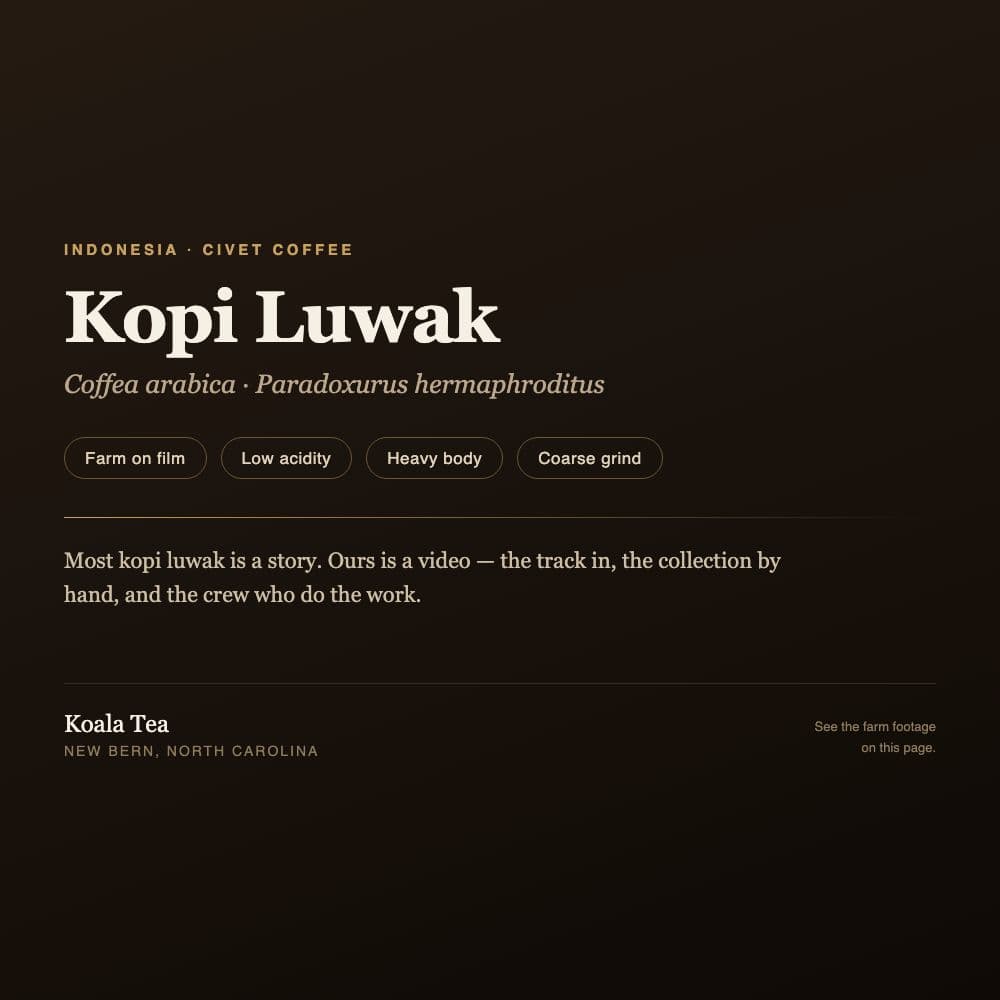
Kopi luwak from Indonesia — coffee cherries eaten and passed by the Asian palm civet, then collected, cleaned, and roasted.
We are going to be straight with you about this category, because almost nobody is. Kopi luwak is the most counterfeited coffee on earth. Investigations by the BBC and others have found that a large share of coffee sold as "wild-sourced" comes from caged civets kept in poor conditions, and genuinely authenticated wild supply worldwide is estimated in the hundreds of kilograms a year — not the tonnes that get sold under the name.
So instead of adjectives, we filmed it. Our supply comes from a hillside plantation we have footage of: the track in, the collection off open ground and fallen logs by hand, and the crew who do the work, shown with their permission. That video is on this page. Most kopi luwak is a story. Ours is a video.
What we will not do is print the word "wild" on a bag we cannot document. If and when we hold certification for wild collection, we will say so plainly and price it accordingly. Until then you are buying honest civet coffee from a farm we can show you, which is more than most sellers of this coffee can offer.
What it tastes like: low acidity, heavy body, and an earthy, syrupy sweetness with chocolate and tobacco notes. It is a slow, thick cup rather than a bright one.
THE SPEC SHEET Origin: Indonesia Region / farm: [TO CONFIRM] Altitude: [TO CONFIRM] masl Varietal: [TO CONFIRM] Process: civet-passed, sun-dried, hand-sorted Roast: [TO CONFIRM] Roast date: printed on every bag Tasting notes: dark chocolate, tobacco leaf, raw sugar, low acidity, heavy body
Why we publish a spec sheet when nobody else in this category does: specialty coffee has had a shared vocabulary for decades. Country, region, altitude, varietal, process, roast date. A roaster who prints all six is telling you they know exactly what is in the bag. Kopi luwak sellers almost never print any of it — they print a legend about a civet instead, and the vagueness is the point.
On roast date specifically: check it, not the best-by date. Best-by tells you when a company stopped guaranteeing something. Roast date tells you how old your coffee actually is. Seven to twenty-one days off roast is the window for filter brewing, ten to thirty for espresso. A bag with no roast date on it is telling you something, and it is not good.
Brewing: a coarser grind and a longer contact time suit it — French press or a slow pour-over. It is a heavy, low-acid coffee, so the bright fast methods that flatter an Ethiopian will waste it.